
When your dentist recommends a crown, you’re making an investment in protecting and restoring your tooth. Naturally, you want to understand your options and choose the approach that delivers the best results for your specific situation.
Today’s patients have two primary crown fabrication methods available: traditional laboratory-made crowns and CEREC same-day crowns. Both can produce excellent outcomes, but they differ significantly in process, timeline, and patient experience.
At Henrickson Dental in Maplewood, MN, we offer both traditional and CEREC same-day crown options. Dr. Mike Henrickson has extensive experience with both approaches and helps patients select the method that best suits their needs, priorities, and clinical situation.
This comprehensive comparison gives you the information you need to make an informed decision about your crown treatment.
Understanding Traditional Laboratory Crowns
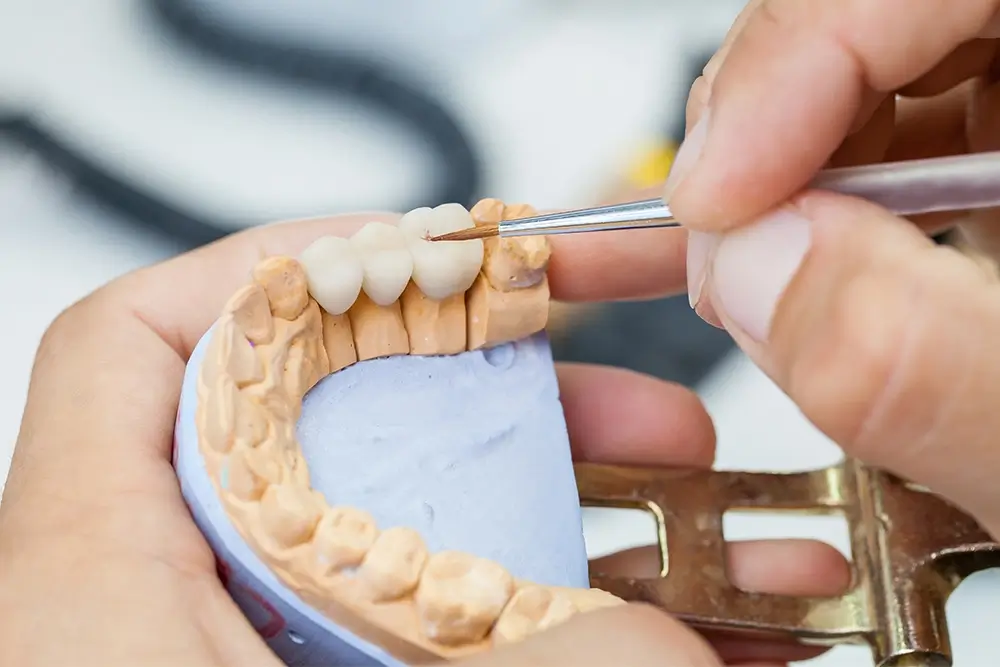
Traditional crown fabrication has been the standard approach for decades. The process involves multiple appointments and off-site laboratory fabrication.
The Traditional Crown Process
Your first appointment involves tooth preparation, taking impressions using putty-like materials in plastic trays, selecting a shade to match your natural teeth, and placing a temporary crown made from acrylic or composite material.
The impressions ship to a dental laboratory where skilled technicians create a custom crown. This typically takes one to three weeks. During that time, you wear the temporary crown, being careful about eating sticky or hard foods that might dislodge it.
When your permanent crown returns from the lab, you schedule a second appointment. The dentist removes your temporary crown, tries in the permanent restoration, makes any necessary adjustments, and cements it permanently to your tooth.
Traditional Crown Materials
Laboratory crowns can be made from various materials including porcelain-fused-to-metal (a metal core with porcelain overlay), all-ceramic or all-porcelain, gold or other metal alloys, and zirconia (a very strong ceramic material).
The material choice depends on which tooth needs restoration, your bite characteristics, aesthetic requirements, and budget considerations. Each material has specific advantages and disadvantages.
Advantages of Traditional Laboratory Crowns
Traditional methods offer certain benefits. Dental laboratories employ skilled ceramists who can hand-craft crowns with exceptional aesthetic detail, particularly important for highly visible front teeth. The multi-week timeline allows for complex shade matching and customization. Some dentists and patients simply feel more comfortable with time-tested methods they’ve used successfully for years.
For extremely complex aesthetic cases requiring precise shade matching across multiple crowns, the artistic skills of master ceramists can be valuable.
Disadvantages of Traditional Laboratory Crowns
The traditional approach has inherent limitations. You need two appointments separated by weeks, requiring time off work or other commitments. Temporary crowns can be uncomfortable, trap food, cause sensitivity, and occasionally fail. Traditional impressions using putty materials are often unpleasant and can trigger gag reflexes.
Communication between your dentist and the laboratory technician happens indirectly through notes and photos, potentially leading to miscommunication about aesthetic goals or functional requirements. If the crown doesn’t fit properly or meet expectations, it must be sent back to the lab, adding more time to an already lengthy process.
Understanding CEREC Same-Day Crowns
CEREC (Chairside Economical Restoration of Esthetic Ceramics) represents modern digital dentistry. The entire crown fabrication process happens in your dentist’s office during a single appointment.
The CEREC Crown Process
Your appointment begins similarly to traditional crowns with tooth preparation. But instead of messy impressions, your dentist uses a compact digital scanner to capture precise 3D images of your tooth. This scanning process is quick and comfortable.
The digital scan feeds into sophisticated design software where your dentist creates your custom crown, considering bite relationships, adjacent teeth positioning, and aesthetic requirements. Once the design is finalized, the data transfers to an in-office milling machine that carves your crown from a solid ceramic block in about 15 to 20 minutes.
After milling, your dentist characterizes and glazes the crown to match your natural teeth, then permanently bonds it to your prepared tooth. You leave with a permanent restoration. No temporary crown. No second appointment.
Our detailed article CEREC Technology Explained: How Same-Day Dental Crowns Work provides an in-depth look at the technology and process behind same-day crowns.
CEREC Crown Materials
CEREC crowns are made from advanced ceramic materials engineered specifically for CAD/CAM fabrication. Modern CEREC ceramics come in various formulations optimized for different needs.
Some materials prioritize strength for molars that endure heavy chewing forces. Others emphasize aesthetics with superior translucency and fluorescence for front teeth. Newer materials offer excellent combinations of both properties.
According to research published in Dental Materials, modern CAD/CAM ceramics deliver mechanical properties comparable to or exceeding traditional crown materials.
Advantages of CEREC Same-Day Crowns
Same-day crowns offer significant benefits. The entire treatment completes in one appointment, typically two to three hours. You never wear an uncomfortable temporary crown. Digital impressions are more comfortable than traditional putty impressions.
Your dentist controls the entire process from design through delivery, ensuring the final restoration meets your specific needs without relying on indirect communication with a lab technician. If adjustments are needed, they happen immediately during your appointment.
Digital scanning is more accurate than traditional impressions according to the American Dental Association®, eliminating distortion that can occur with impression materials.
Potential Limitations of CEREC Crowns
While CEREC works excellently for most situations, there are some considerations. Very complex aesthetic cases involving multiple front teeth might benefit from the hand-crafted artistry of laboratory ceramists. The appointment is longer than a traditional first appointment, though it replaces both appointments in the traditional process.
Not all dental offices have invested in CEREC technology, so availability might be limited depending on where you live.
Direct Comparison: Key Factors
Let’s compare traditional and CEREC crowns across the factors most important to patients.
Time and Convenience
Traditional crowns require two appointments separated by one to three weeks. Your first appointment typically lasts 60 to 90 minutes. Your second appointment is usually shorter, around 30 to 60 minutes. Total time invested includes two appointments plus the weeks of managing a temporary crown.
CEREC crowns require one appointment lasting approximately two to three hours. Total time invested is one appointment with no temporary crown management.
For busy professionals, parents managing family schedules, or anyone who values efficiency, the single-visit advantage of CEREC is substantial. You take time off work or arrange childcare once instead of twice.
Comfort and Patient Experience
Traditional impressions using putty in plastic trays can trigger gag reflexes, have an unpleasant taste and texture, and require holding still for several minutes. Temporary crowns can feel bulky, trap food particles, cause temperature sensitivity, and occasionally become dislodged.
CEREC digital scanning is quick and comfortable, requires no impression materials, and allows normal breathing during the process. You never experience the awkwardness of wearing a temporary crown.
Most patients report that the CEREC process is significantly more comfortable than traditional impression methods.
Accuracy and Fit
Traditional impressions can distort as the material sets, shrink during storage before being poured, or get damaged during shipping to the laboratory. Studies show accuracy within 100 to 200 microns when properly executed.
CEREC digital scans eliminate material distortion, maintain perfect accuracy from capture through milling, and typically achieve accuracy within 20 to 50 microns according to research in Clinical Oral Investigations.
The superior accuracy of digital impressions translates to better-fitting crowns with more precise margins and contact points.
Durability and Longevity
This is perhaps the most important consideration for many patients. How long will your crown last?
Traditional laboratory crowns have decades of clinical data supporting excellent longevity. Porcelain-fused-to-metal crowns show survival rates above 95% at 10 years. All-ceramic laboratory crowns demonstrate similar performance when properly made and maintained.
CEREC crowns, while newer than traditional methods, have accumulated substantial clinical research. Studies published in the Journal of Dentistry show CEREC crowns have survival rates exceeding 90% at 10 years, with many lasting significantly longer.
Research in the Journal of Prosthetic Dentistry found no significant difference in clinical performance between CEREC and traditional laboratory crowns when evaluated over five to ten years.
The bottom line? Both approaches deliver excellent longevity when properly executed. Crown lifespan depends more on factors like oral hygiene, grinding habits, and regular maintenance than on the fabrication method.
Aesthetics
This comparison requires nuance. Both approaches can produce beautiful, natural-looking results.
Traditional laboratory crowns benefit from the hand-crafted artistry of skilled ceramists who can layer different shades of porcelain to create extremely lifelike restorations. For highly visible front teeth where aesthetics are paramount, this artistic capability can be valuable.
CEREC crowns are milled from solid ceramic blocks, then characterized and glazed by your dentist to match surrounding teeth. Modern CEREC ceramics offer excellent translucency and shade matching capabilities. For most situations, CEREC crowns are indistinguishable from traditional crowns and blend seamlessly with your natural smile.
The advantage of CEREC for aesthetics is that your dentist designs the crown chairside while looking directly at your teeth, ensuring shape and shade match your preferences. Communication about aesthetic goals happens directly between you and your dentist rather than being relayed to an off-site technician.
For single crowns or simpler cases, CEREC often delivers superior aesthetic results due to this direct communication. For extremely complex multi-crown cases, laboratory fabrication might offer advantages.
Cost
Cost comparisons are complex because they involve multiple factors.
Traditional crowns include laboratory fees (which can be substantial), materials for both temporary and permanent crowns, and the overhead of two separate appointments. CEREC crowns involve significant upfront technology investment for the dental practice but eliminate laboratory fees and temporary crown materials.
In practice, CEREC crowns typically cost about the same as traditional laboratory crowns at most practices. The value proposition of CEREC isn’t lower cost but rather time savings and improved convenience.
At Henrickson Dental, we provide transparent pricing for both options and work with your insurance to maximize benefits. The investment is comparable for both approaches.
Adjustment and Problem Resolution
With traditional crowns, if the restoration doesn’t fit properly or meet aesthetic expectations when it returns from the lab, your dentist must send it back for remake. This adds one to three more weeks to your treatment timeline.
With CEREC crowns, if adjustments are needed during the try-in phase, your dentist makes them immediately. The crown doesn’t leave the office until it meets exacting standards for fit, function, and aesthetics.
This ability to resolve issues immediately is a significant advantage of the in-office fabrication process.
Clinical Situations: Which Approach Works Best?
Different clinical situations may favor one approach over the other.
Single Posterior Crowns (Molars and Premolars)
For single crowns on back teeth, CEREC is often ideal. Aesthetics are less critical than for front teeth, strength and fit are paramount, and the efficiency of single-visit treatment is valuable. CEREC ceramics offer excellent strength for posterior teeth.
Single Anterior Crowns (Front Teeth)
For single front teeth, both approaches work well. CEREC provides excellent aesthetics for most situations, and the chairside design process allows direct communication about shade and shape. Very complex aesthetic cases with unusual coloring or translucency might benefit from laboratory fabrication.
At Henrickson Dental, Dr. Henrickson evaluates each case individually and recommends the approach that will deliver optimal aesthetic results.
Multiple Crowns Requiring Precise Shade Matching
When restoring multiple front teeth that must match perfectly, laboratory fabrication sometimes offers advantages. Ceramists can create crowns in batches ensuring absolutely identical shading and characterization.
That said, modern CEREC systems can also produce multiple matching crowns. The decision depends on the specific complexity and your dentist’s expertise with both methods.
Crowns After Root Canal Treatment
Teeth after root canal therapy need crown protection relatively soon. CEREC allows immediate crown placement, which is convenient and protective. Traditional crowns require wearing a temporary for weeks, during which the brittle post-root canal tooth is at risk.
Emergency Crown Replacement
If you have a crown failure requiring urgent replacement, CEREC allows same-day resolution. Traditional methods would require wearing a temporary for weeks while awaiting laboratory fabrication.
Patients with Dental Anxiety
Many anxious patients prefer completing everything in one visit rather than anticipating a second appointment. The elimination of temporaries also reduces anxiety about potential failures between visits.
Scientific Evidence: What Does Research Show?
Multiple peer-reviewed studies have compared CEREC and traditional crowns. The consensus from research is clear: both methods produce clinically successful restorations when properly executed.
A systematic review published in the Journal of Evidence-Based Dental Practice analyzing multiple studies found no significant difference in survival rates between CAD/CAM (CEREC) crowns and traditional laboratory crowns over five to ten years.
Research in the International Journal of Prosthodontics examining marginal fit (how precisely the crown meets the tooth) found that CEREC crowns often demonstrate superior marginal adaptation compared to traditional crowns, likely due to the accuracy of digital impressions.
Studies evaluating patient satisfaction consistently show that patients prefer the CEREC process due to reduced treatment time, elimination of temporaries, and improved comfort during impressions.
The scientific evidence supports what we see clinically at our Maplewood practice: both approaches work excellently, with CEREC offering efficiency and comfort advantages without compromising quality or longevity.
Making Your Decision: Questions to Consider
When deciding between traditional and CEREC crowns, consider these questions:
How Important Is Time Efficiency?
If you have schedule flexibility and don’t mind two appointments, traditional methods work fine. If you have limited time off work, busy family commitments, or simply prefer efficiency, CEREC’s single-visit advantage is compelling.
How Do You Feel About Temporary Crowns?
If you don’t mind wearing a temporary for a few weeks, traditional crowns are fine. If you want to avoid the inconvenience, potential sensitivity, and risk of temporary failure, CEREC eliminates these concerns entirely.
How Do You React to Dental Impressions?
If traditional putty impressions trigger your gag reflex or make you uncomfortable, CEREC’s digital scanning process is significantly more pleasant.
How Complex Is Your Case?
For straightforward single crowns, CEREC works excellently. For extremely complex multi-crown aesthetic cases, discuss with your dentist whether laboratory fabrication might offer advantages.
What Are Your Priorities?
If convenience, efficiency, and modern technology align with your values, CEREC is often the better choice. If you simply prefer traditional methods you’re familiar with, that’s perfectly reasonable too.
The Henrickson Dental Approach
At our Maplewood practice, we don’t push patients toward one method or the other based on what’s convenient for us. We recommend the approach that will deliver the best results for your specific situation.
Dr. Henrickson has extensive experience with both traditional and CEREC crown fabrication. During your consultation, he evaluates your tooth, discusses your priorities and concerns, and recommends the method that makes sense for your case.
For most patients, CEREC same-day crowns offer the ideal combination of quality, efficiency, and comfort. But we’re equipped to deliver excellent results with either approach.
Our commitment is always to your optimal outcome, delivered with the personal attention you expect from a family-owned practice that’s served this community for over three decades.
When Do You Actually Need a Crown?
Before comparing fabrication methods, it’s worth understanding whether you actually need a crown. Our article When Do You Need a Dental Crown? Signs, Causes & Treatment Options explores the various situations where crown treatment becomes necessary and helps you recognize warning signs.
Common indications include teeth with large fillings, cracked or fractured teeth, teeth after root canal treatment, severely decayed teeth, and cosmetic concerns.
Experience Both Options at Henrickson Dental
Whether you choose traditional laboratory crowns or CEREC same-day crowns, you’ll receive the same high-quality care and attention to detail at Henrickson Dental. Our comprehensive restorative services cover all your crown needs with the advanced technology and experienced expertise you deserve.
Contact us today at 651-777-8900 to schedule your crown consultation. Dr. Henrickson will examine your tooth, explain your options clearly, answer all your questions, and recommend the approach that will deliver optimal results for your specific situation.
Located in Maplewood and serving patients throughout Oakdale, Roseville, East St. Paul, and surrounding communities, we combine modern dental technology with the personalized care and community trust that only a family-owned practice can provide.
Don’t let uncertainty about crown options delay the treatment your tooth needs. Schedule your consultation today and discover why patients throughout the Maplewood area trust Henrickson Dental for their restorative dental care.